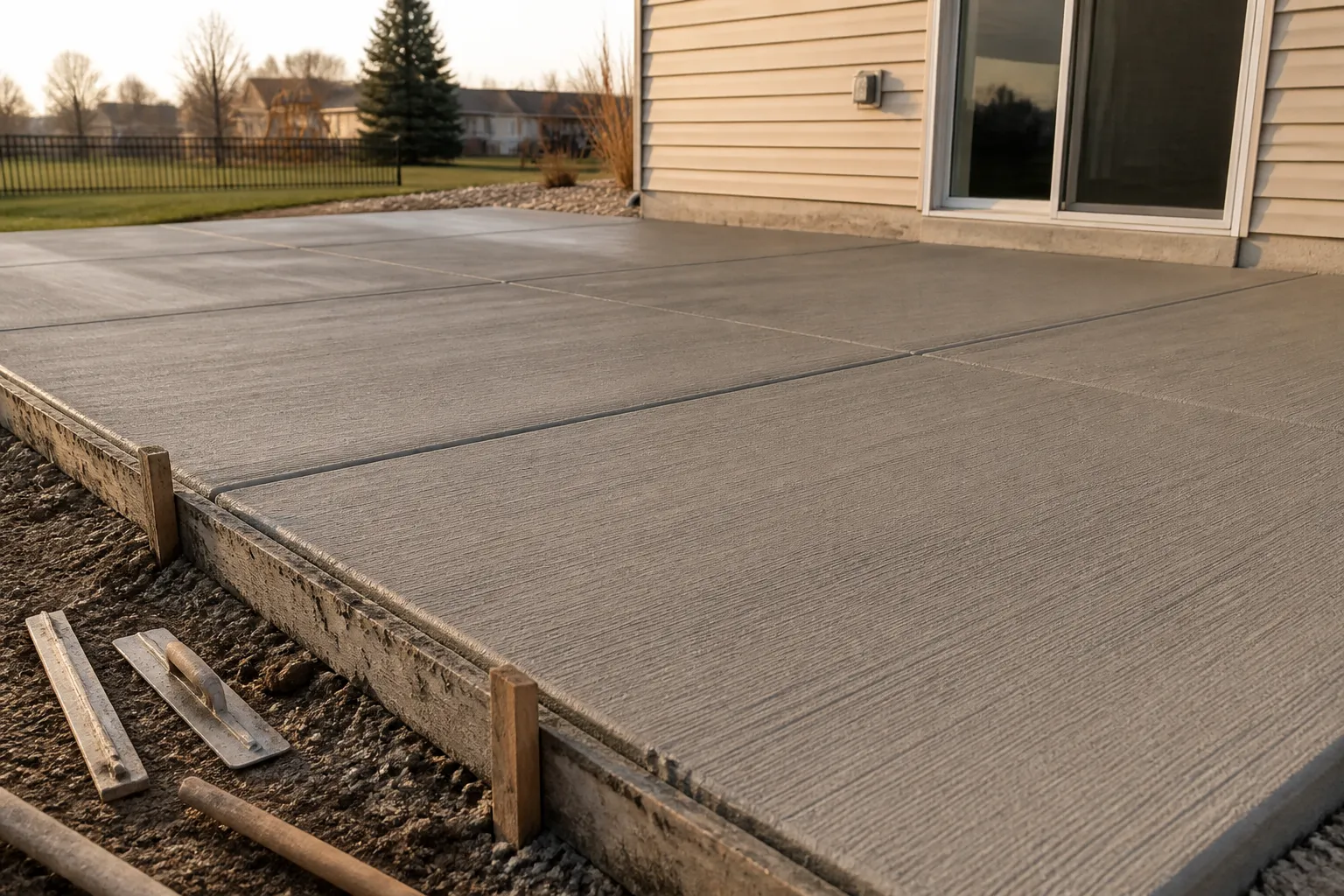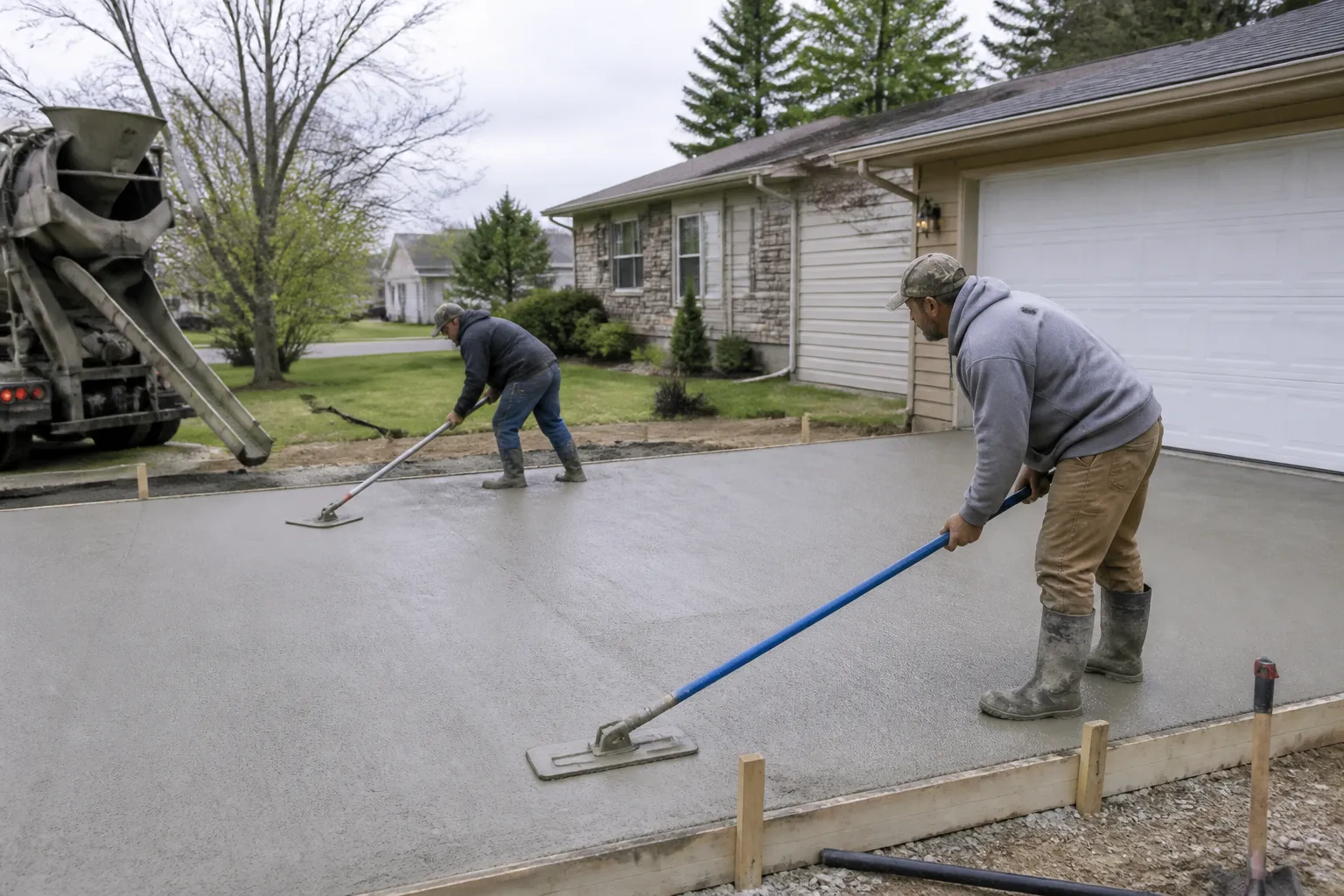
Stamped concrete can look like stone, brick, or wood. Plain concrete is simple and lower cost. Both can last a long time when they are poured on a good base. Bloomington Elite Concrete Contractor put this side-by-side together to help you choose.
What stamped concrete is
Stamped concrete is regular concrete that gets color and a pattern pressed into it while it is still soft. The crew adds color to the mix or the surface, lays down stamp mats, and presses in the texture. After it cures, it is cleaned and sealed. The result can look like flagstone, slate, cobblestone, or brick at a lower cost than real pavers.
What plain concrete is
Plain concrete is poured and finished smooth or with a broom texture for grip. It can still have clean saw-cut joints, a border, or a light color. It is the most common choice for driveways and work areas.
Cost
Angi’s 2026 data lists a concrete patio about 3.5 to 4 inches thick at around $10 per square foot. Stamped finishes run $5 to $15 per square foot, and Angi calls stamped the most expensive patio finish, at 2 to 5 times the cost of simpler options (Angi patio cost guide). For driveways, Angi lists plain concrete at about $7 per square foot.
See our 2026 concrete cost guide for more price ranges.
Colors and patterns
Earth tones like tan, gray, and brown hide dirt and tire marks better than very dark or very light colors. A second color, called a release or antique color, adds depth so the pattern looks more like real stone. Large patterns, like big slate or flagstone shapes, tend to look more natural on big patios. Smaller patterns, like brick, fit walks and borders. Ask to see samples outdoors, since color looks different in sunlight.
Upkeep
Plain: Keep it clean, fill cracks when they show up, and seal it from time to time to slow water damage.
Stamped: The sealer protects the color and the pattern, so it needs to be redone on a schedule. Your contractor can tell you how often for the sealer they use. Skipping it lets the color fade and lets water in.
Winter and grip
Sealed stamped concrete can get slick when wet or icy. Ask for a slip-resistant additive in the sealer if the area gets a lot of foot traffic. Deicing salt is hard on both types, and the freeze-thaw care guide covers safer habits.
Repairs
Plain concrete is easier to patch. A crack in stamped concrete is harder to hide, because the color and pattern need to match. Both can be raised with slab-jacking if a section sinks while still in one piece.
What install day looks like
Plain concrete is poured, leveled, and finished, then left to cure. Stamped concrete adds steps while the concrete is still workable: color goes on, mats are pressed in, and edges are hand-tooled. Because timing matters, stamped work needs a crew sized to the slab and good weather. After curing, the surface is washed and sealed.
Where each one shines
- Stamped: patios, pool decks, front walks, and entries where looks matter most.
- Plain: driveways, side walks, garage aprons, and work areas where cost and easy repair matter most.
- Mix both: a plain driveway with a stamped border, or a plain patio with a stamped edge, gives you style for less.
Questions to ask before you choose
- Which patterns and colors work best on a slab this size?
- What sealer will you use, and how often should it be redone?
- Can you add grip to the sealer?
- How will joints be placed so they do not cut through the pattern badly?
- What base and slope will you use so water drains away?
Our take
If budget is tight or the area takes heavy use, plain concrete is hard to beat. If you want an outdoor space that feels finished, stamped is worth a look, as long as you plan for resealing. Explore our stamped concrete, concrete patio, and concrete driveway pages to see what each project includes.
Common questions
Does stamped concrete crack?
Any concrete can crack. Good base work and well-placed joints help control where cracks form.
Can I stamp my old concrete?
Stamping is done while concrete is wet. For an old slab, a stamped overlay or a coating may be an option if the slab is sound. Our repair, level, or replace guide explains how to tell.