Central Illinois winters swing above and below freezing again and again. Each swing is hard on concrete. Bloomington Elite Concrete Contractor wrote this guide to explain what that does to your driveway, walks, and patio, and what you can do about it without spending much.
How freeze-thaw damage works
Concrete looks solid, but it has tiny pores and hairline cracks. Water soaks in. When it freezes, water expands by about 9 percent. That push breaks off small bits of the surface. When it thaws, more water gets in, and the cycle repeats. Over a few winters, this can turn a smooth slab rough.
You will often see it first as scaling, where thin flakes peel off the top, or spalling, where bigger chips pop out near edges and joints.
Be careful with deicing salt
Salt melts ice, but the melted water soaks into the slab and refreezes later. Some deicers also attack the surface. A few habits help:
- Skip deicers on new concrete during its first winter. Use sand for grip instead.
- On older concrete, use the least amount that works, and shovel slush off so it does not sit.
- Watch what drips off your car. Salty slush from roads lands on the garage floor and driveway all winter.
Seal exposed concrete
A penetrating sealer slows how much water gets into the slab. Less water means less damage when it freezes. Ask your contractor which sealer fits your surface and how often to reapply it. Stamped and colored concrete usually needs resealing more often than plain gray concrete, since the sealer is part of the look.
A concrete coating is another option for garage floors, where salt and water from cars do the most harm.
Move water away
Water that pools on or next to a slab does the most damage. Walk your property after a heavy rain and look for:
- Downspouts that empty onto a driveway or walk
- Low spots where puddles sit for hours
- Soil that slopes toward the slab instead of away
- Gaps along the edge where water runs under the concrete
Short downspout extensions and a little regrading are cheap fixes that protect expensive concrete.
Shovel with care
Metal blades and ice chippers can gouge the surface and edges. A plastic blade is gentler. If you hire snow removal, ask the crew to keep plow blades raised a bit over decorative or stamped concrete.
A spring checklist
Once the snow is gone, take a slow walk over your concrete:
- Look for new cracks or cracks that grew over the winter.
- Check for flaking near the garage door, steps, and where cars park.
- Look for slabs that heaved up or dropped down. Frost can lift a slab, and it does not always settle back level.
- Note any trip edges on walks and steps.
Small cracks are worth filling before the next winter. Our concrete repair page explains the process. A slab that dropped can often be lifted with slab-jacking.
The first year for new concrete
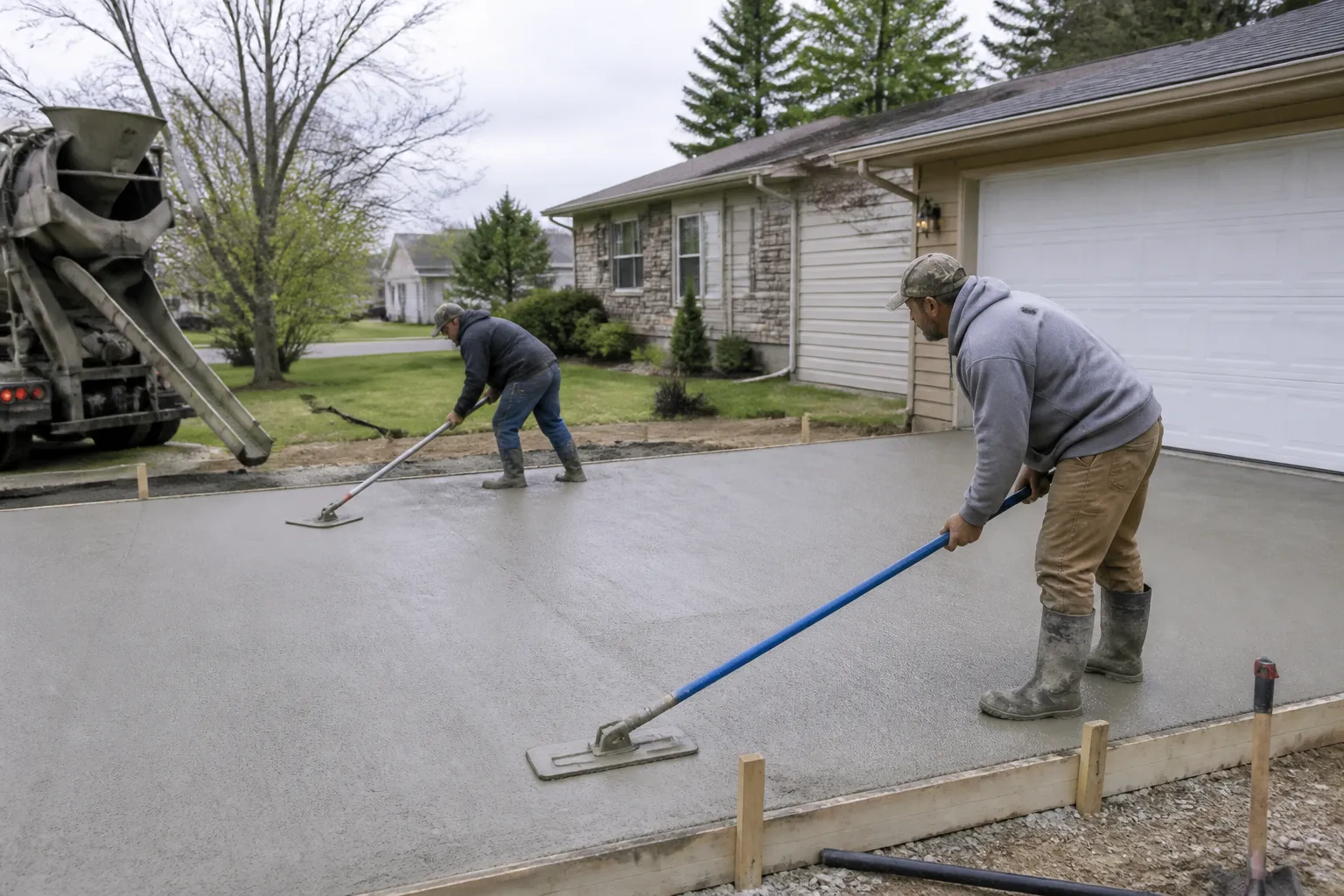
New concrete keeps gaining strength for weeks after the pour, and its first winter is the riskiest. Keep heavy trucks off it until your contractor says it is ready. Skip deicing salt that first winter. Keep the surface clear of standing water and piled snow that melts and refreezes on it. Ask when the first coat of sealer should go on, since some sealers need the slab to cure first.
Planning a new pour?
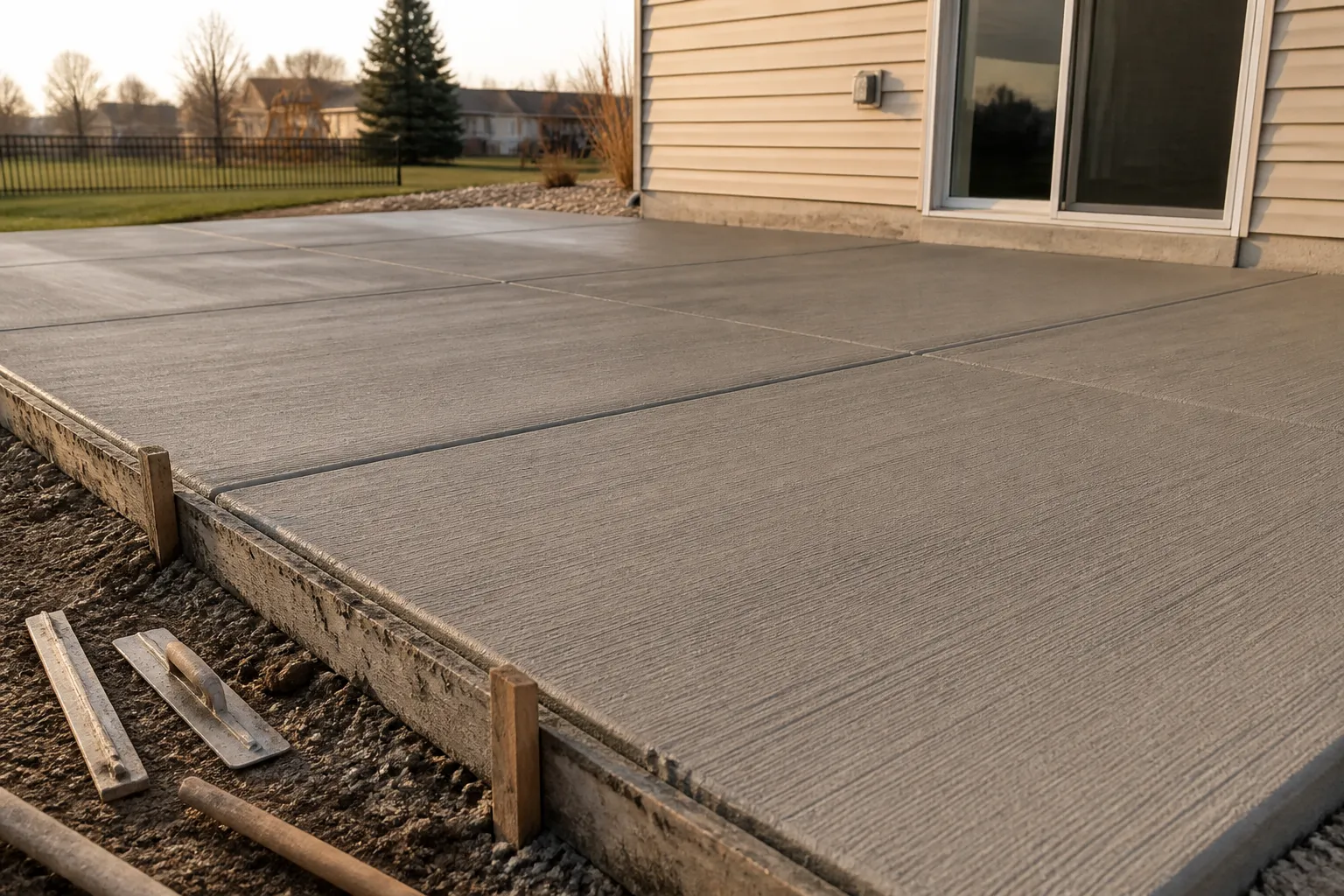
If you are replacing concrete, ask about what helps it hold up in freezing weather. That can include a well-drained stone base, proper slope, control joints, and a concrete mix made for outdoor use in cold climates. Time the pour so the slab can cure before hard freezes arrive.
Not sure if your slab can be saved? Read repair, level, or replace for the signs. For budget numbers, see our 2026 concrete cost guide, which uses Angi price data.
Common questions
Does sealing stop all winter damage?
No, but it slows water from soaking in, which is the main cause. Good drainage and gentle snow care do the rest.
Why is my garage floor flaking near the door?
That spot gets the most salty slush from cars. Rinsing it in late winter and adding a coating or sealer can help.
Can heaved concrete settle back on its own?
Sometimes it settles partly in spring, but often it stays uneven. If it leaves a trip edge, have it checked.